The last remnant of the ancient Guineo-Congolian rainforest that once spanned the
continent — the Greater Kakamega Forest Ecosystem, including Kibiri Forest in
Vihiga County, under growing pressure from the people who live alongside it.
487Butterfly species recorded
243Bee species recorded
36Snake species recorded
The reserves
Greater Kakamega Forest Ecosystem
Seven reserves across Western Kenya, including Kibiri Forest in neighbouring Vihiga
County — the area K-BIAN actually works across.
In the heart of western Kenya lies a rare and ancient treasure — the
Kakamega Forest. It is a mid-altitude tropical rainforest, the easternmost outlier of the
Congo Basin forests and the last remnant of the ancient Guineo-Congolian rainforest that
once spanned the continent. It is Kenya’s only tropical rainforest.
K-BIAN works across the wider Greater Kakamega Forest Ecosystem: Kakamega
Forest Reserve (19,792.4 hectares), together with Kibiri Forest (3,691 hectares) in
neighbouring Vihiga County, Bunyala Forest (826.6 hectares), Malava Forest Reserve (718.8
hectares), Kisere Forest Reserve (471 hectares), River Yala Nature Reserve (538 hectares) and
Isecheno Forest Station Nature Reserve (138 hectares). A little less than half of the
ecosystem currently remains as indigenous forest.
Kakamega Forest Reserve reached its current size after several excisions over time and
the creation of Kakamega National Reserve. River Yala Nature Reserve and Isecheno Forest
Station Nature Reserve both lie within Kakamega Forest Reserve.
Under pressure
One of the world’s most densely populated rural areas
The communities bordering the forest are its prime local users, relying on it for
firewood, building poles and traditional medicines.
The forest is under threat of degradation due to increasing human population, which has
resulted in over-exploitation of the natural resources. The region is one of the most
densely populated rural areas in the world, and pressure on the forest resources is
considerable. The communities whose land borders Kakamega Forest are the prime local users
of the forest’s products and resources.
Most local inhabitants rely on the forest to supply important resources such as firewood,
building poles and traditional medicines. Cattle grazing also occurs in the forest, with the
potential to cause destruction to both flora and fauna. Exploitation has been predominantly
for firewood and timber, industrial logging operations and cattle grazing, resulting in a
reduction of forest area.
682/km²Population density, Kakamega County side
1,047/km²Population density, Vihiga County side
A newer pressure
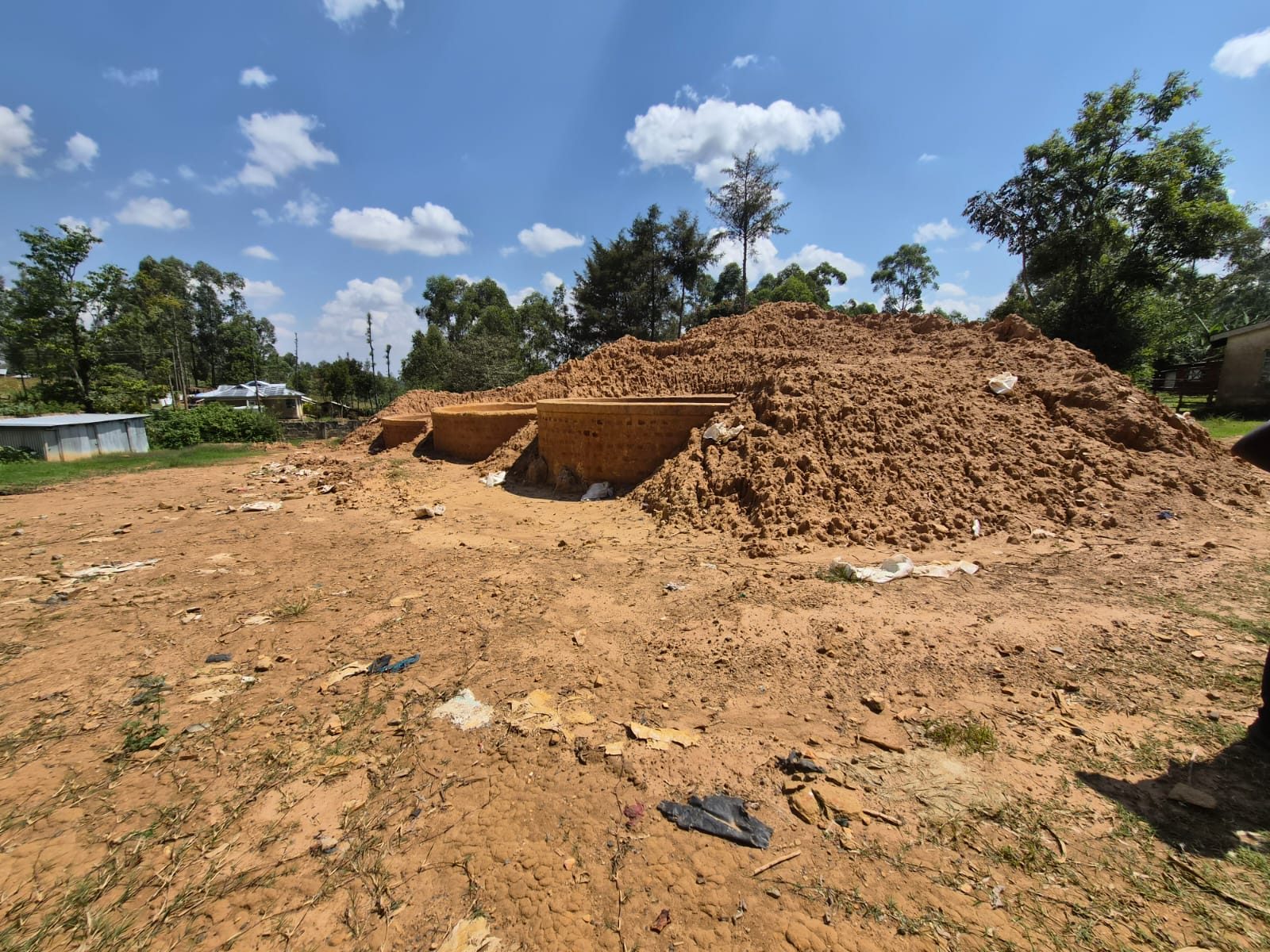
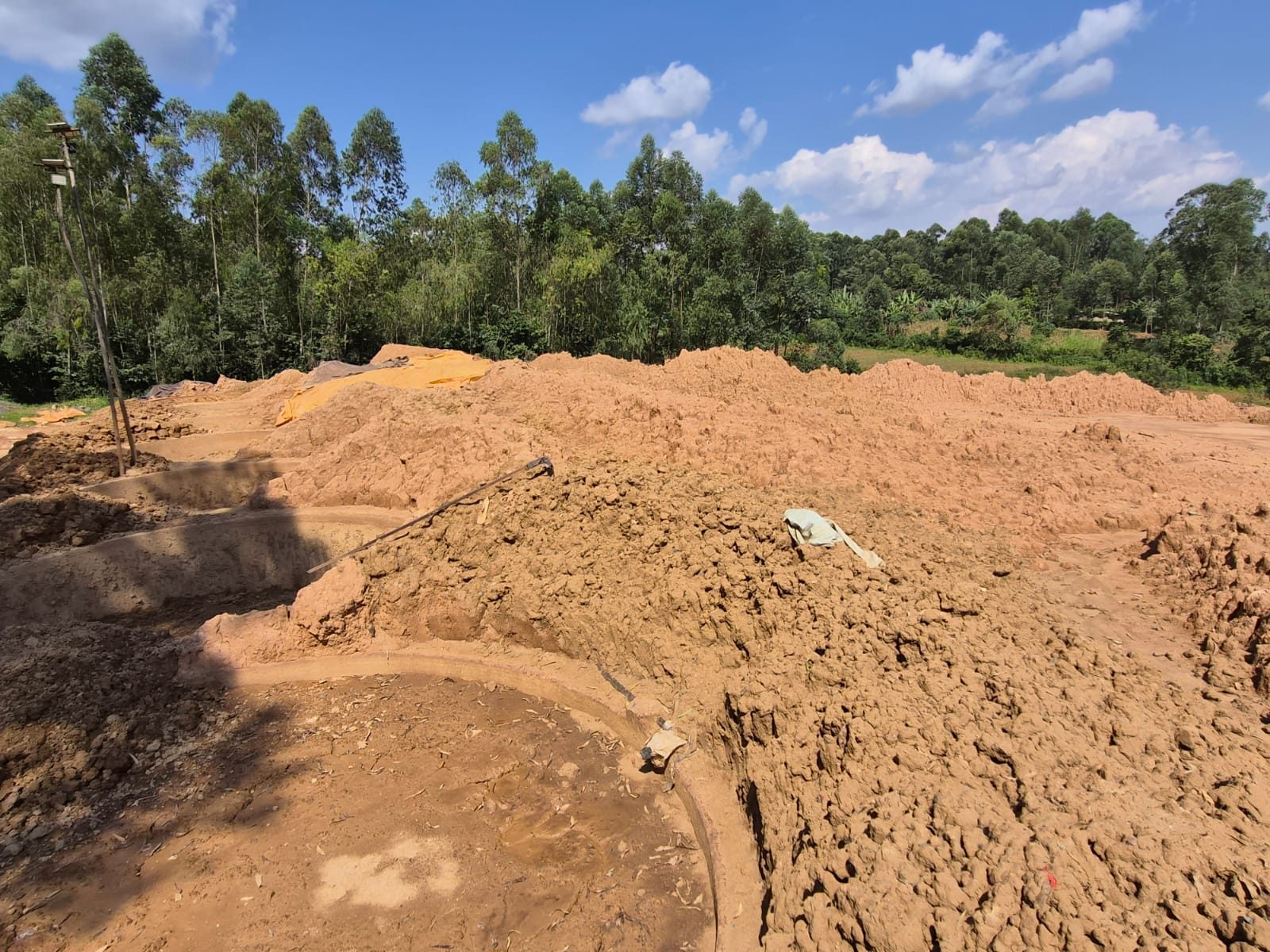
Mining
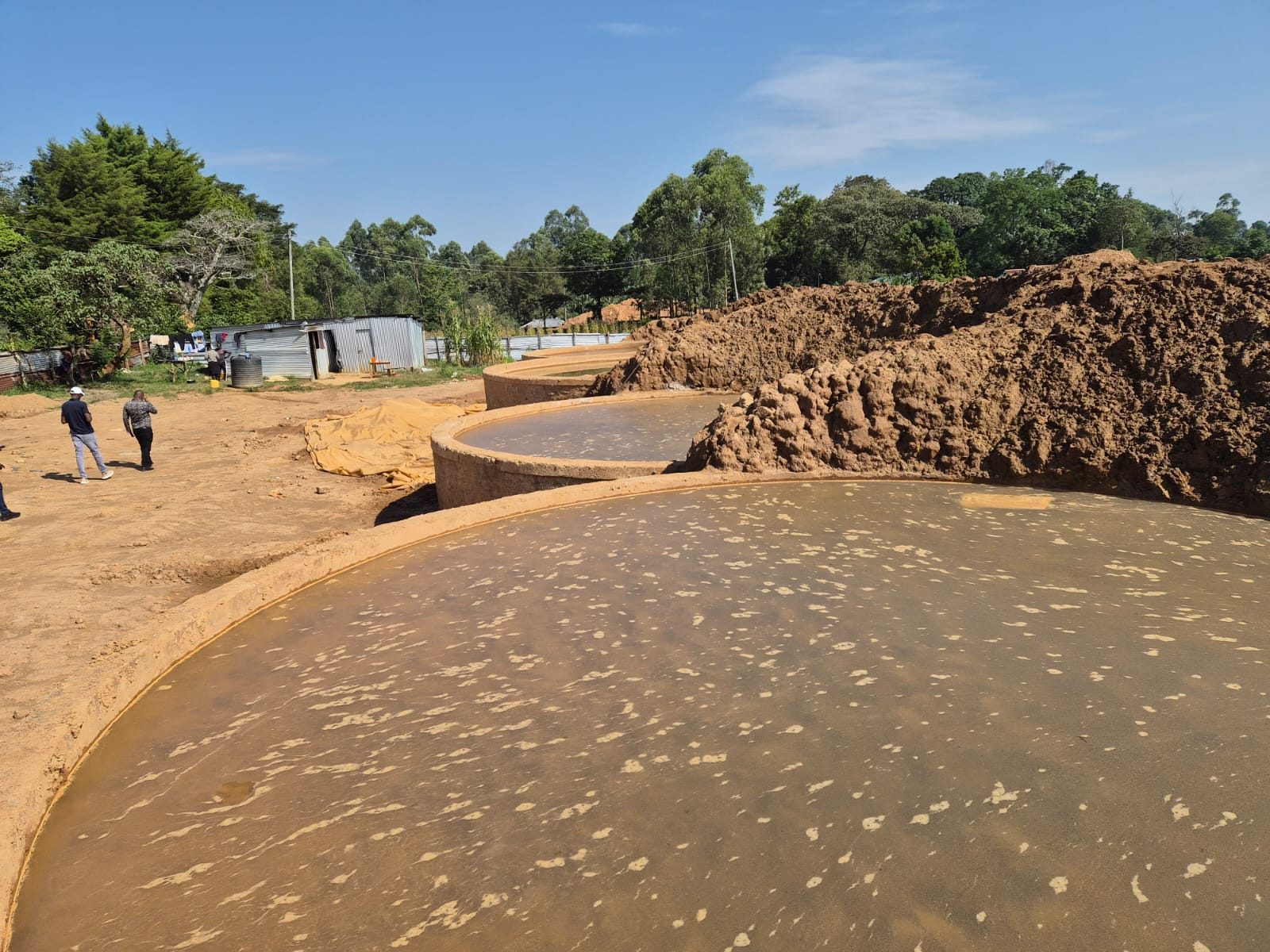
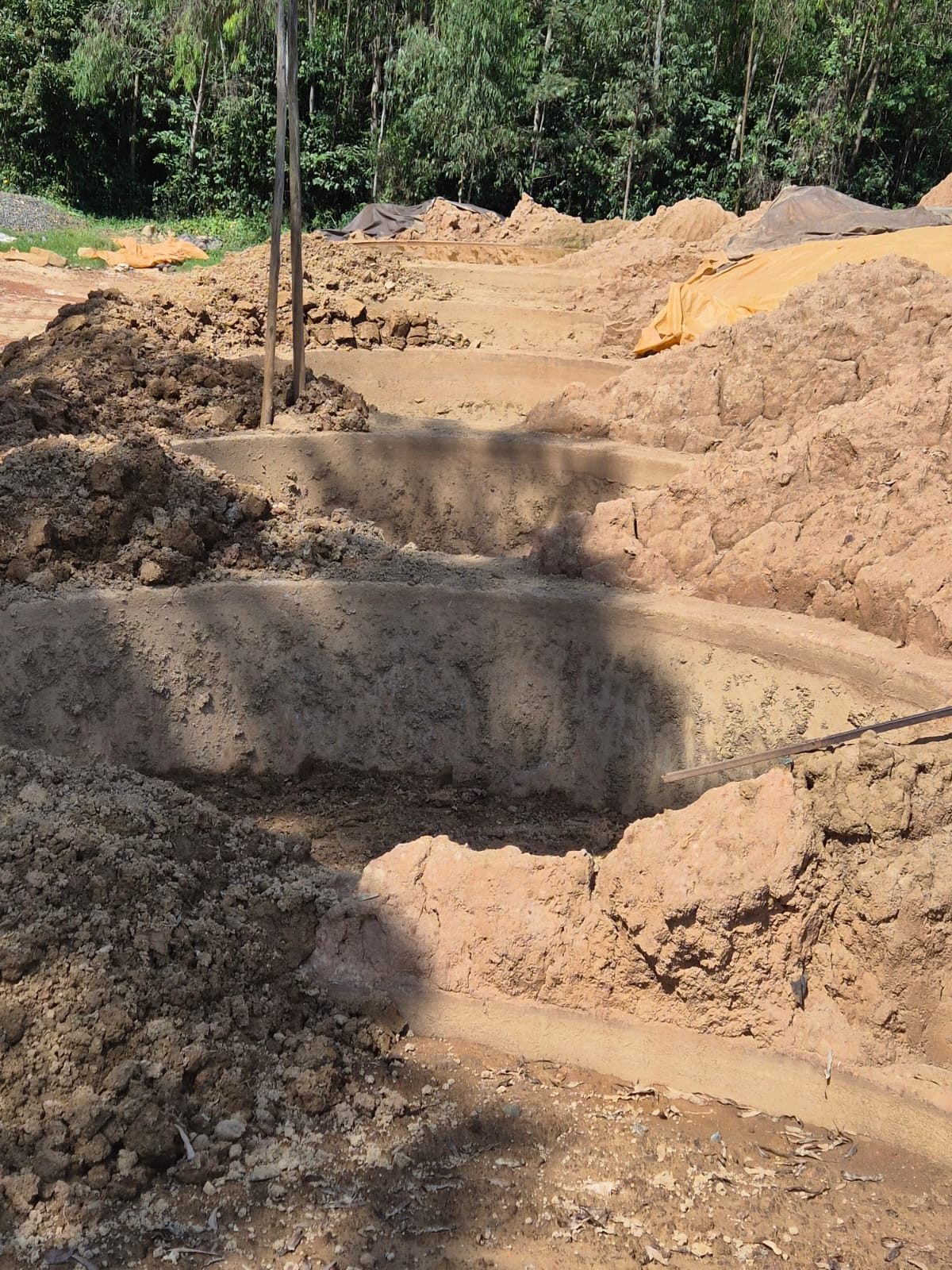
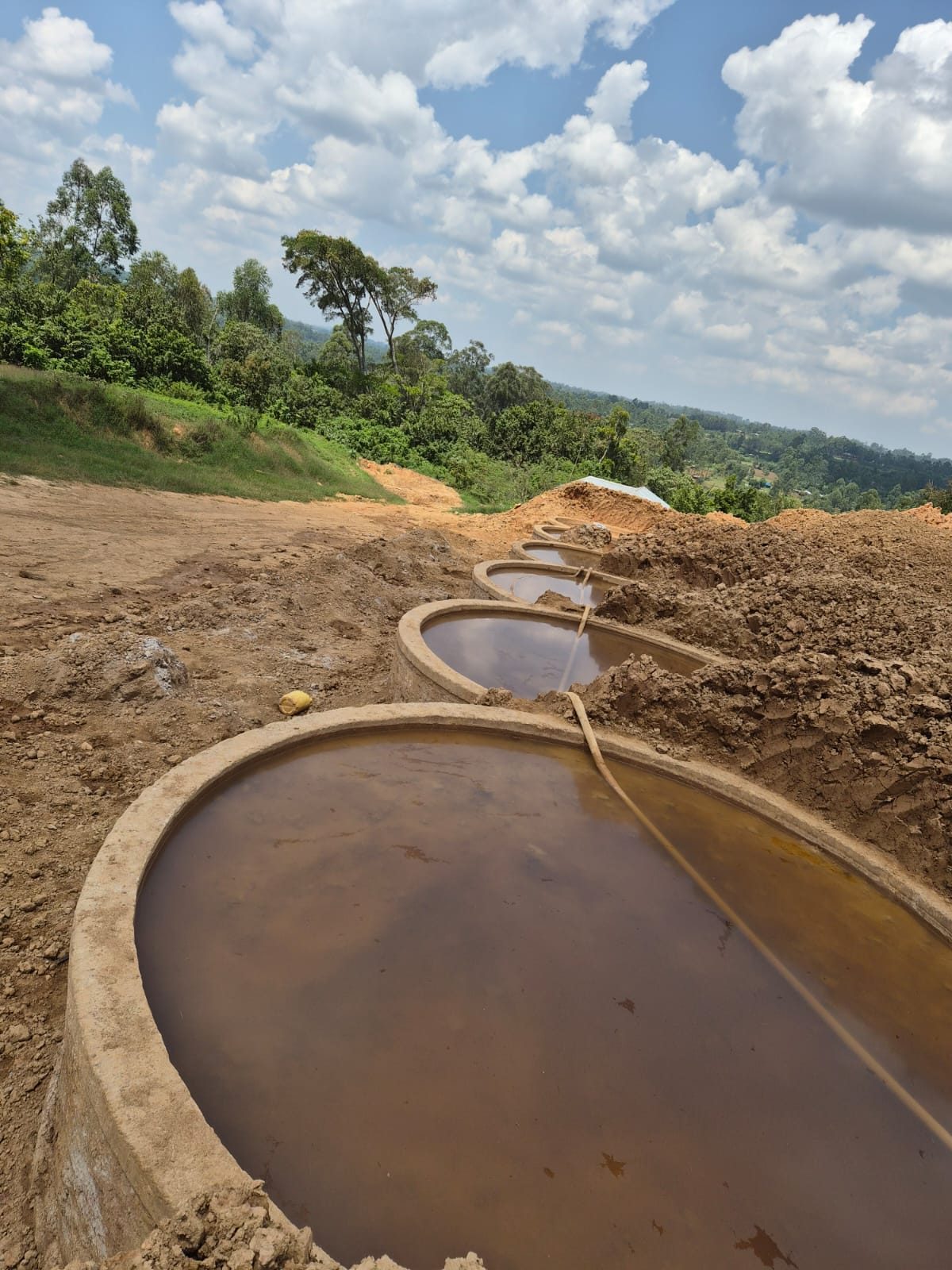
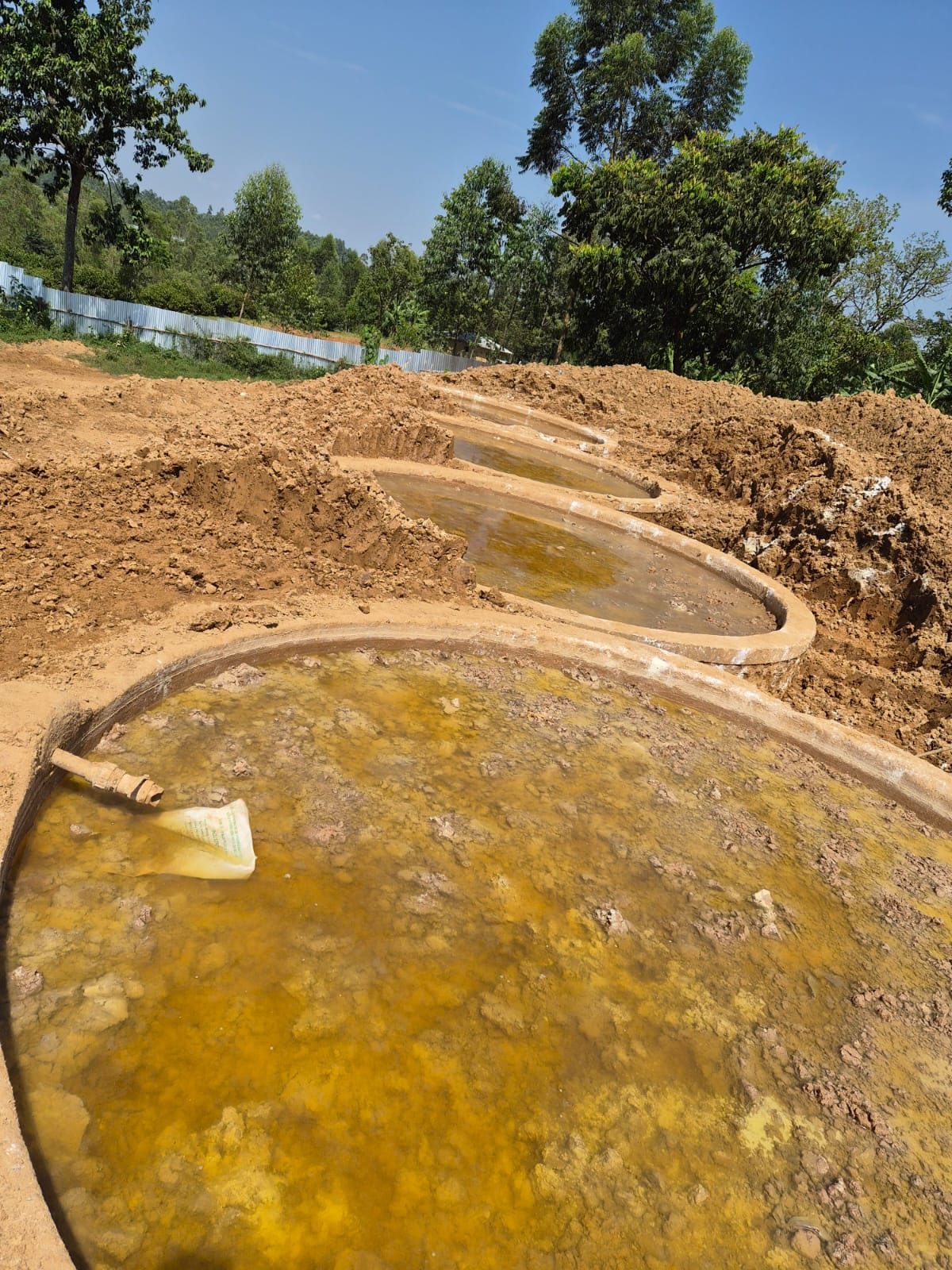
Alluvial mining along River Isiukhu, and more than 70 leaching plants and sites
across Kakamega County, add soil movement and water contamination to the pressures
described above.
A leaching site along River Isiukhu, Kakamega County — the scale of the pits is visible against the people and shelter nearby.Ground excavated in stepped tiers at a mining site along River Isiukhu, Kakamega County.Discoloured water standing in mining leaching pits along River Isiukhu, Kakamega County.Water discoloured to a deep yellow-ochre inside a leaching pit along River Isiukhu, Kakamega County.Bare, stripped ground and a soil heap around excavated pit walls along River Isiukhu, Kakamega County.Soil heaps from mining activity piled against the forest edge along River Isiukhu, Kakamega County.
487 butterfly species, 36 snake species including the Forest Cobra and Jameson’s
Mamba, and one of Kenya’s last populations of De Brazza’s monkey.
The Kakamega Forest Ecosystem is an island of immense biodiversity with a high level of
endemism. Numerous mammals live in the forest, including pottos, colobus monkeys, De
Brazza’s monkeys, giant forest hedgehogs and bush pigs. Birds of interest include the
Blue-headed Bee Eater, Black-billed Turaco, Turner’s Eremomela and Grey parrots.
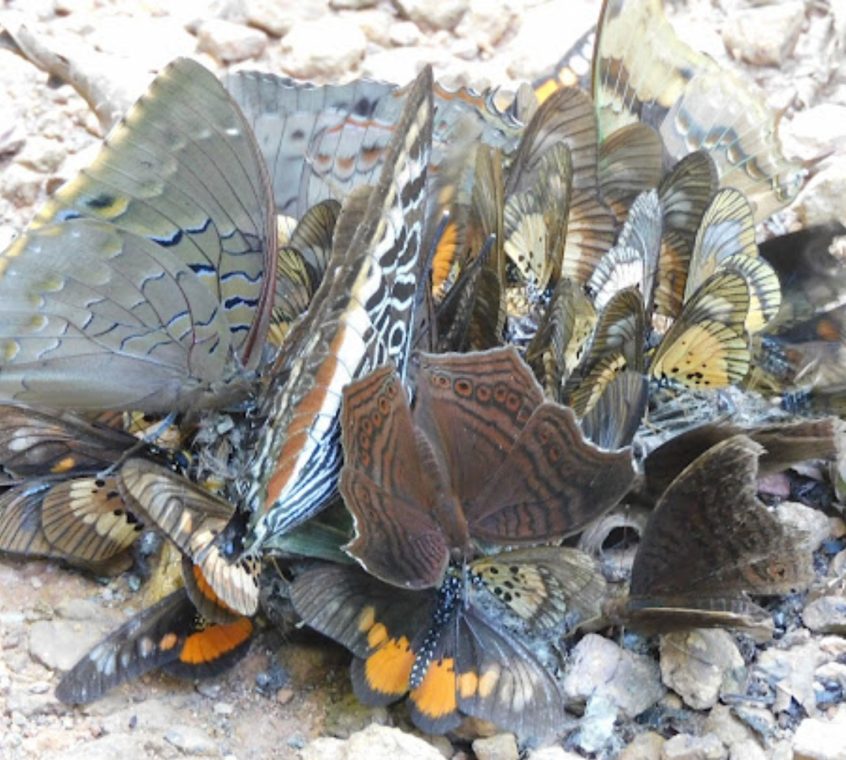
The forest holds an exceptional insect diversity: 487 species of
butterflies, 243 species of bees, 170 ant species, 72 species of dragonflies and 25
termite species. It also shelters 36 snake species, among them the forest
cobra, black-lipped cobra, Jameson’s mamba, bush viper, rhinoceros-horned viper,
Kaimosi blind snake, Gold’s cobra and Gabon viper.
Its trees include Elgon teak, red stinkwood, white stinkwood, several varieties of croton
and Pouteria altissima. Cave-dwelling species include cave crickets, the mountain
fruit bat, the Egyptian fruit bat and the brown house bat. The forest is recognised as an
Important Bird Area.
The forest is a significant watershed area. The Isiukhu and Yala rivers flow through it,
gathering tributaries from the forest’s terrain and steep-sided river basins. The
Nzoia River, while not entirely within the forest, is a major river in the region and
receives tributaries from the forest — namely the Lusumu, Sioka and Feradzi.
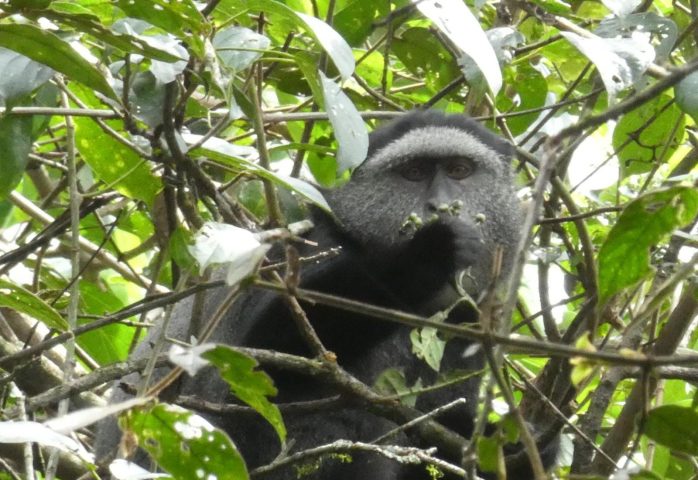
Blue Monkey
One of the diverse primate species recorded here, alongside De Brazza's and the Red-tailed monkey.
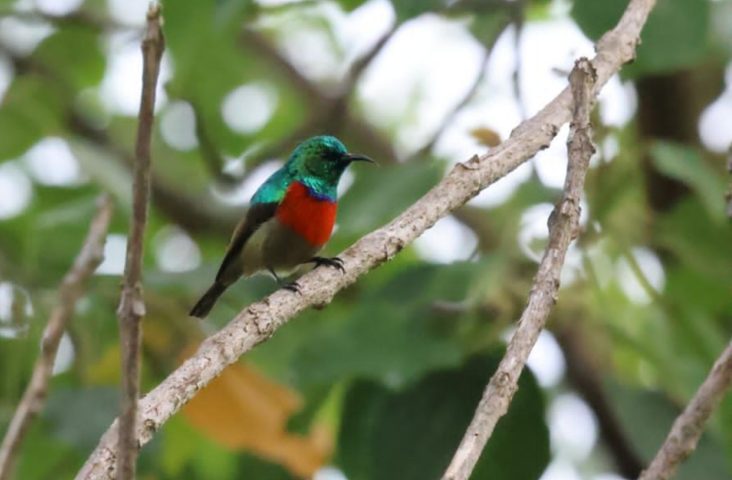
Sunbird
A nectar-feeding bird recorded across the ecosystem, its iridescent plumage among the forest's most vivid.
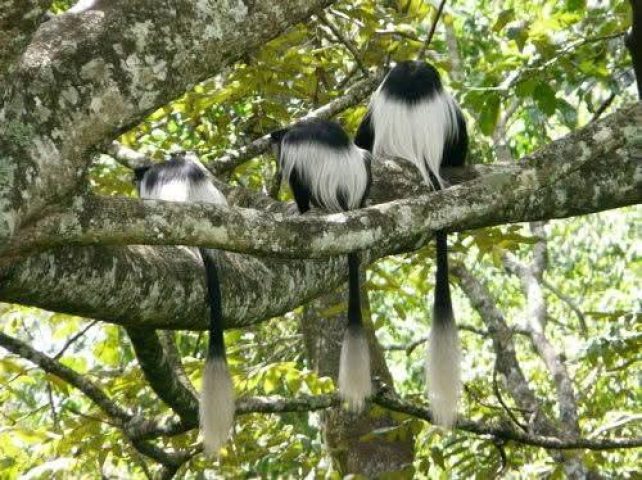
Black and White Colobus
An arboreal, leaf-eating monkey living among the forest's indigenous canopy trees.
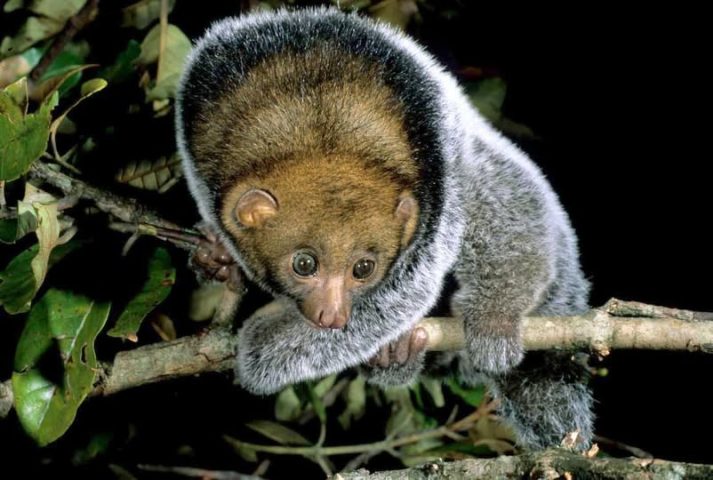
Potto
A slow-moving nocturnal primate; Documentary 1 names pottos specifically among the forest's mammals.
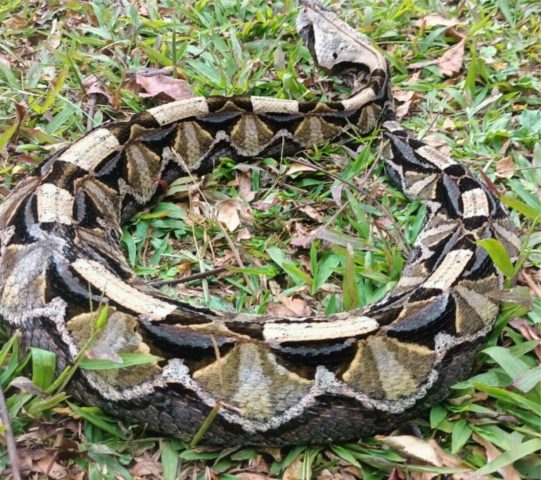
Gaboon Viper
One of the forest's 36 recorded snake species, alongside the Bush Viper, camouflaged against leaf litter by an intricate pattern.
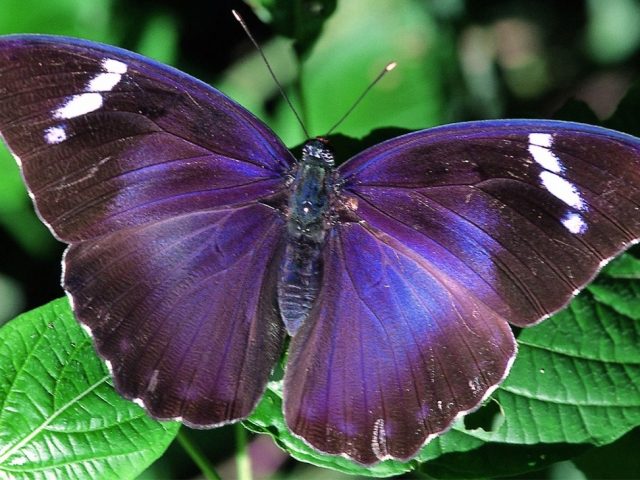
Butterfly
One of 487 butterfly species recorded across the ecosystem.
Great Blue Turaco
One of the forest's most visible birds, often seen feeding on fruit high in the canopy.
One of 487 butterfly species recorded across the Kakamega Forest Ecosystem.
What makes it exceptional
Exceptional Resource Values
The ecosystem’s value across five dimensions, from Documentary 3’s Exceptional
Resource Values assessment.
Biodiversity
Important Bird Area (IBA)
Diverse primates (De Brazza's monkey, Blue monkey, Black and White Colobus, Red-tailed monkey, baboons)
High insect diversity (487 species of butterflies, 72 species of dragon flies, 170 ant species, 25 termite species, 243 species of bees)
Endemic snakes (36 snake species including Forest Cobra, Black-Lipped Cobra, Jameson's Mamba, Bush Viper, Rhinocerous-Horned Viper, Kaimosi Blind Snake, Gold's Cobra And Gabon Viper)
Rich diversity of tree species (Elgon teak, red stinkwood, white stinkwood, several varieties of croton, and Pouteria altissima)
Cave dwelling species (cave crickets, mountain fruit bat, Egyptian fruit bat, Brown house bat)
Remnant of Guinea-Congolean Equatorial Forest
Scenic value
Beautiful panoramic view points (Isiukhu Nature Trail, Isiukhu Water Fall, Yala Water Fall, Liranda, Mahiakalo and Buyangu Hills)
Rivers (Isiukhu and Yala)
Natural glades
Kakamega Forest Canopy
Social value
Source of livelihood (Fodder for cattle, grass, sericulture – wild silk, medicinal plants, wild vegetables – mushrooms, tree nursery establishment, domestication and commercialization of Mondia and Osmum spp, eco-tour guiding, bandas, bird watching, bee keeping, butterfly farming, snake farming)
Good micro-climate (high rainfall, watershed for Lake Victoria Basin)
Cultural value
Tiriki cultural sites for circumcision
Community cultural activities (bull fighting, dog market at Lubao, traditional dances, pottery at Ilesi and Mukhonje)
Potential eco-tourism investments
Investments in ecolodges, tree houses, canopy walks, camping, adventure sites (ziplines), upgrade of the nature trails for biking and guest houses (bandas) in the forest.
KWS has so far mapped three ecolodges namely Isiukhu River Water Fall (40-60 bed ecolodge); Kisere Forest Site (12-bed tree house) and Forest Canopy Cable Bridge.
With the fencing of Kakamega Forest, KWS is able to support the introduction of mountain gorillas as well as establish an animal orphanage for education and recreation
Our response
Managing the ecosystem
Four programmes address habitat, tourism, forest resources and community partnership.
K-BIAN has designed programmes to avoid, minimise or mitigate potential negative impacts
upon species, habitats and ecosystem services, maintaining the ecological quality of the
environment and its ecosystem services.
Ecological Management Programme
This programme is designed to ensure that critical habitat for endemic, rare, endangered,
threatened and other species demanding special attention is addressed, and that proper
measures are undertaken to ensure the survival of species in these habitats. Its aim is to
ensure that the ecosystem’s ecological components, processes and services are conserved
and understood, and threats to ecological integrity reduced through adaptive management. The
nine conservation targets identified are near natural forest systems, riverine and riparian
systems, secondary forest, forest glades, indigenous and exotic plantation forests,
Prunus africana, bush viper, Chapin’s Flycatcher and De Brazza’s
monkey.
Tourism Development and Management Programme
This programme aims to promote high quality, low impact tourism based on the unique
biodiversity and culture that offers a memorable visitor experience. Activities include
hiking, rock climbing and bird watching. The ecosystem offers unique and diverse
opportunities for nature-based tourism, positioned within the Western Kenya Tourism Circuit.
K-BIAN intends to work with the stakeholders responsible for tourism support infrastructure
to market Kakamega Forest as an important tourism destination.
Forest Resource Management Programme
K-BIAN plans to work with other stakeholders in the conservation and protection of the
ecosystem’s natural forest and its rich biodiversity, for the sustainable use of forest
resources and services, so that it remains invaluable to the people living around it as a
source of timber, fuel wood, herbal medicines, pasture, building materials and food.
Community Outreach and Education Programme
This programme aims to ensure the participation and support of adjacent communities in
conservation, sustainable use of forest resources and socio-economic empowerment for
improved livelihoods, through effective communication, joint planning and collaboration
between key forest stakeholders. The entry point is Community Forest Associations (CFAs)
— K-BIAN has already signed Memoranda of Understanding with four: Bunyala, Kibiri,
Muileshi and Machetu (see Get Involved).
K-BIAN’s programmes
What K-BIAN is doing
7 programmes address the pressures described above, across forest,
wildlife, health, education, livelihoods and mining.